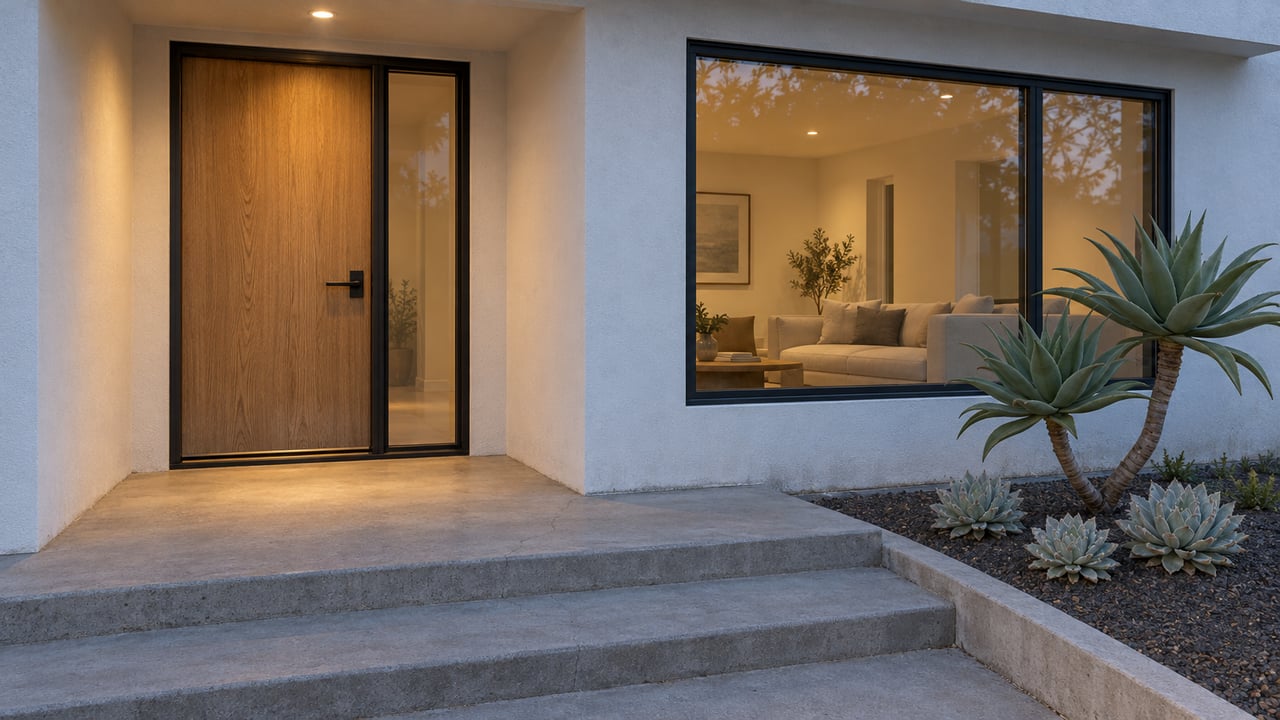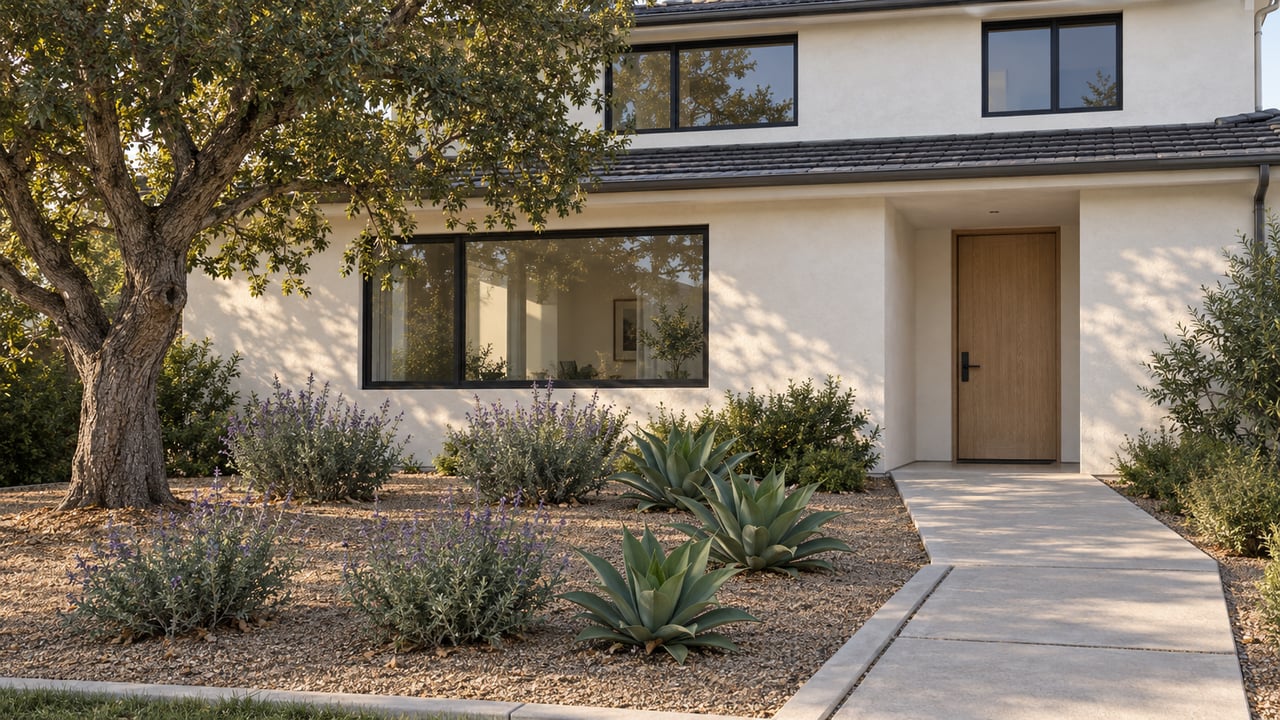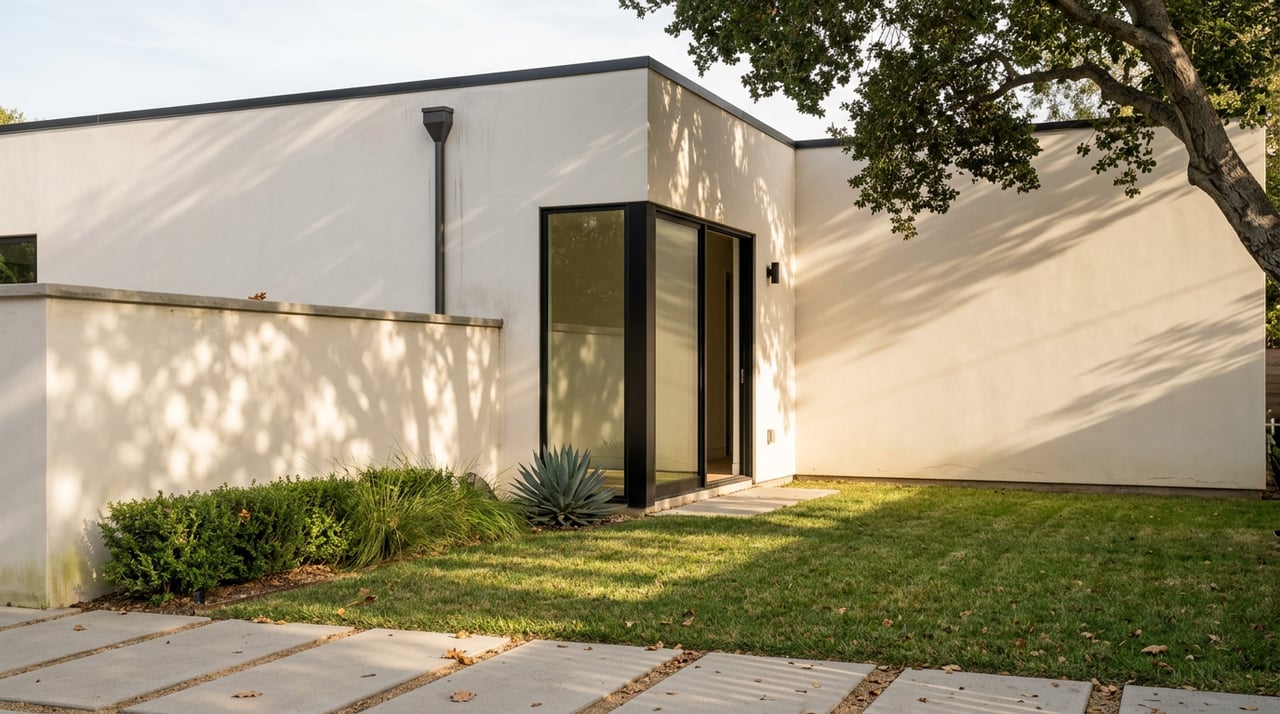
Two listings, four blocks apart, both backing up to the LOSSAN rail corridor in Leucadia. Same era of house, same rough square footage, same distance to the sand. The key difference for buyers is where each property sits relative to Leucadia Boulevard: the city's current quiet-zone project has a defined scope, and the timeline differs depending on the crossing.
That distinction is worth more than most of what gets discussed when buyers weigh homes near the tracks in Leucadia, Old Encinitas, or Cardiff-by-the-Sea. The city just landed real money for rail safety. The horn noise everyone assumes will disappear with it is not disappearing on one clean schedule. It depends on where you're standing, and on decisions a different city has not yet made.
What $33.6 Million Actually Buys
On August 19, 2026, Encinitas was awarded up to $33.6 million in federal funding through the FRA's Federal-State Partnership for Intercity Passenger Rail Program, part of a larger $150 million-plus package for rail improvements along the Pacific Surfliner route in San Diego County. The money covers roughly six miles of the LOSSAN corridor and pays for new vehicle and pedestrian gates at three existing crossings: E Street, D Street, and Leucadia Boulevard. It also funds modifications near the downtown Encinitas station, including the closure of the midplatform crossing there. The city covers 20 percent of the cost as a local match.
That's a real infrastructure win and the piece of news most coverage has emphasized. The grant itself does not determine whether the work will silence a train horn.
Two other projects are doing that work, and both are further along than the funding headline suggests. The Leucadia At-Grade Crossings project, which will build new pedestrian and bicycle crossings at Grandview Street and Phoebe Street connecting Coast Highway 101 to Vulcan Avenue, cleared a major hurdle when the California Public Utilities Commission approved it on February 5, 2026. In June 2026, the city council added another $300,000 to move that project into final engineering. Separately, the quiet zone project itself, run by the city's contractor RailPros, hit 50 percent design in October 2025 and was tracking toward 90 percent design by the end of summer 2026. Grant applications for the remaining construction funding, through the CRISI and RCE federal programs, went in on May 20, 2026, with results expected later this year.
These are documented project steps. For buyers, the important distinction is the project's current scope.
Where the Quiet Zone Project Reaches
The project on the city's own page is no longer called the "Citywide Rail Corridor Quiet Zone." It's called the "E Street to Leucadia Boulevard Quiet Zone."
The current project name identifies a corridor from E Street to Leucadia Boulevard. It does not extend past it. Quiet status at the Leucadia Boulevard crossing itself depends on matching safety work at Cannon Road in Carlsbad.
The reason surfaces in documentation from NOWLeucadia, a Leucadia community group that has tracked this project for years. Quiet zone status at a given crossing requires supplementary safety measures, the four-quadrant gates and medians that let the FRA sign off on silencing the horn there. Encinitas has funded and designed those measures south of Leucadia Boulevard. Achieving quiet status at the Leucadia Boulevard crossing itself, and for the stretch north of it, requires a matching upgrade at the Cannon Road crossing in Carlsbad. That's not Encinitas's project to fund or schedule. It belongs to a different city, on a different budget cycle, with no public timeline attached to it as of this writing.
The practical result: a train heading south from Carlsbad into Encinitas will keep sounding its horn approaching Leucadia Boulevard even after every dollar of the current grant is spent and every crossing south of it goes quiet. A house six blocks south of Leucadia Boulevard is on a real path toward a documented reduction in train noise within the next couple of years. A house two blocks north of it, or right on that crossing, is waiting on a Carlsbad city council agenda that doesn't exist yet.
What a Few Blocks Are Actually Worth
Train noise has a measurable price tag in resale value, and it's been studied enough that the range is well established. Research cited from Zillow's home data found that houses within 250 feet of active tracks sold for about 2.6 percent less than comparable homes farther away, with that gap widening to 4.2 percent for homes within 50 feet. A separate study out of the University of Wisconsin-Milwaukee found discounts as steep as 8.4 percent for homes within 500 feet of rail lines, with the size of the discount growing the closer a property sits to the tracks.
Run that against a home priced in the low seven figures, which describes plenty of inventory in this stretch of Leucadia, and a 4 percent discount is real money, the kind that shows up as a specific line in a negotiation rather than a vague sense that the house feels loud. The academic literature on quiet zones themselves also points the other direction once horns stop: eliminating that noise source tends to firm up or lift values in the affected area, since the disamenity driving the discount goes away.
The number that matters for a buyer right now isn't the citywide median. It's which side of that discount your specific address sits on, and how long it's likely to stay there.
How to Actually Check Which Side of the Line You're On
Before treating proximity to the tracks as a temporary issue, a few things are worth confirming directly:
- Whether the property sits north or south of the Leucadia Boulevard crossing, since that line currently determines which timeline applies
- The city's quiet zone project page, which tracks design percentage and grant status directly rather than through secondhand summaries
- Whether the specific crossing nearest the home is one of the three getting new gates under the August 2026 federal grant, or one of the separate Leucadia at-grade pedestrian crossings at Grandview and Phoebe
- Whether any Carlsbad-side announcement about Cannon Road safety upgrades has surfaced, since that's the trigger for quiet status to extend north of Leucadia Boulevard at all
None of this requires anything beyond a phone call to the city's engineering department or a careful read of the project pages already public. It just requires knowing to ask the question in the first place, which most buyers touring homes near the tracks don't.
What This Means If You're Comparing Neighborhoods Right Now
If you're deciding between a home near the tracks in Leucadia and something a few blocks inland, or between two homes on opposite sides of Leucadia Boulevard, the quiet zone shouldn't be treated as a single fact that applies evenly to both. South of the boundary, you're buying into a documented, funded process with a realistic path to quieter mornings within the next year or two. North of it, or on the crossing itself, you're buying a house that will sound the way it sounds today for an indefinite stretch, pending a decision in a city hall that isn't Encinitas's.
That's not a reason to avoid either side. It's a reason to account for the project's scope and timeline when comparing homes.
FAQ
Will the quiet zone happen automatically now that the grant is funded? No. The August 2026 grant pays for crossing gates and station modifications. The quiet zone designation itself still depends on the separate design and funding process for supplementary safety measures, which was tracking toward 90 percent design by the end of summer 2026, with grant results for construction funding expected later this year.
What about a house right at the Leucadia Boulevard crossing? That's the boundary point itself. Horn noise there depends on Carlsbad completing matching safety work at its Cannon Road crossing, which has no confirmed timeline as of this writing.
Is the noise discount on tracks-adjacent homes something an appraiser will reflect? Published research points to discounts in the range of roughly 2.5 to 8 percent depending on distance from the tracks, with the exact figure varying by property and market conditions. It's a reasonable starting point for a conversation, not a formula.
If you're weighing a home near this corridor, or trying to figure out what a few blocks of distance from the tracks is actually worth in today's negotiation, Crown & Coast Properties can walk the specific address with you against the city's own project documents before you write an offer. Book a consultation and we'll help you separate the parts of this story that are funded from the parts that are still a hope.
This article is general information, not legal, tax or financial advice. Consult a qualified professional about your situation.